Learn how to get an FHA loan with bad credit. Discover credit requirements, qualification tips, common mistakes, and more in this article.
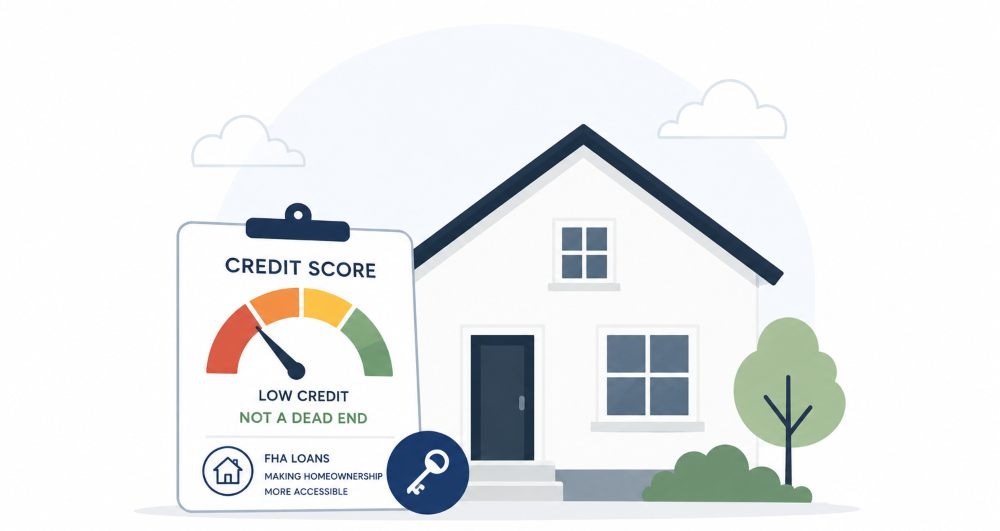
If you have bad credit, you may be wondering whether homeownership is still within reach. The good news is that having a lower credit score doesn’t automatically prevent you from getting a mortgage. In fact, one of the reasons FHA loans were created was to make home financing more accessible to borrowers who may not qualify for some conventional loan programs.
If you’re trying to get an FHA loan with bad credit, it’s important to understand that your credit score is only one part of the approval process. Lenders also evaluate your income, employment history, debt-to-income ratio, available assets, and overall financial profile when determining whether you qualify.
Many homebuyers assume they’ll be denied simply because they’ve experienced financial setbacks in the past. While late payments, collections, bankruptcies, or foreclosures can affect your application, they don’t necessarily mean you’ll be ineligible for an FHA loan.
Every borrower’s situation is different, and lenders look at the complete picture rather than a single number.
In this guide, we’ll explain what “bad credit” means in the context of FHA loans, the factors that can improve your chances of approval, common mistakes to avoid, and practical steps you can take to get an FHA loan with bad credit in 2026.
Can You Get an FHA Loan With Bad Credit?
The short answer is yes, you may be able to get an FHA loan with bad credit, provided you meet the lender’s eligibility requirements and demonstrate that you’re able to manage a mortgage responsibly.
One of the biggest advantages of FHA loans is that they’re designed to make homeownership more accessible than some conventional mortgage programs.
Rather than focusing on your credit score alone, lenders evaluate your complete financial picture, including your income, employment history, debt-to-income ratio, available assets, and overall credit profile.
While FHA loans offer more flexibility, there isn’t a one-size-fits-all answer. Every lender establishes its own underwriting guidelines, and your approval will depend on several factors working together rather than a single requirement.
If your credit isn’t where you’d like it to be, don’t assume you won’t qualify. Many borrowers are surprised to learn they may still be eligible for an FHA loan after speaking with an experienced mortgage banker.
What Does “Bad Credit” Mean?
One of the challenges when researching whether you can get an FHA loan with bad credit is that “bad credit” doesn’t have a universal definition.
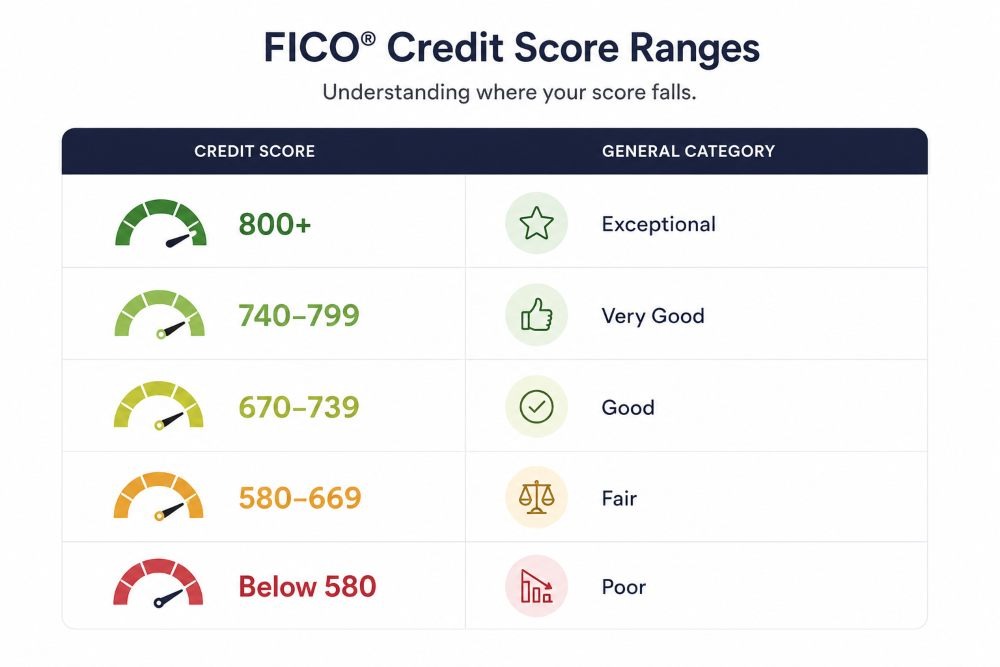
For some people, bad credit means they’ve missed a few payments. For others, it could mean collections, a bankruptcy, a foreclosure, or simply having a limited credit history. In general, credit scores are often grouped into the following ranges:
While these ranges provide a helpful benchmark, your credit score is only one part of the equation. FHA lenders also consider how recently any credit issues occurred, whether you’ve established positive payment habits since then, and how your overall financial profile looks today.
It’s also important to remember that FHA loan requirements and lender guidelines aren’t always the same. Although the FHA establishes minimum program standards, individual lenders may apply additional qualification requirements based on their own lending policies.
That’s why two borrowers with similar credit scores may not receive the same lending decision. Your income, debt, employment history, available assets, and recent financial behavior can all influence whether you’re able to get an FHA loan with bad credit.
Can You Get an FHA Loan With Bad Credit? 6 Key Considerations
1. Bad Credit Doesn’t Always Mean You’re a High-Risk Borrower
If you’re hoping to get an FHA loan with bad credit, it’s easy to assume that a lower credit score automatically means your mortgage application will be denied. In reality, your credit score is only one piece of your financial story, and it doesn’t always reflect your current ability to manage a mortgage responsibly.
Many borrowers have lower credit scores because of temporary financial setbacks rather than long-term financial mismanagement. Life events such as unexpected medical expenses, job loss, divorce, reduced income, or other unforeseen circumstances can affect your credit, even if you’ve since regained financial stability.
For example, imagine two borrowers who both have similar credit scores. One borrower has struggled with missed payments over the past several months and continues to carry significant unpaid debt.
The other experienced financial hardship a few years ago due to a temporary job loss but has maintained stable employment and made every payment on time since then. Although their credit scores may be similar, these borrowers present very different financial profiles.
That’s because lenders don’t simply look at your score, they evaluate the context behind it. When reviewing your application, they may consider questions such as:
Were your credit issues caused by a one-time financial hardship or an ongoing pattern?
Have you established a history of making payments on time since those issues occurred?
Are your current financial obligations manageable?
Have you demonstrated stable employment and reliable income?
Have you taken steps to improve your financial situation?
The answers to these questions help lenders understand whether your past credit challenges are likely to affect your ability to repay a mortgage today.
It’s also important to understand that a credit score is constantly changing. Every on-time payment, reduction in debt, or improvement in your financial habits has the potential to strengthen your credit profile over time. That means your current financial behavior is often just as important as events that occurred several years ago.
If you’ve been working to rebuild your credit, don’t assume that homeownership is out of reach. FHA loans were designed to make financing more accessible, and many borrowers are able to get an FHA loan with bad credit after demonstrating improved financial responsibility.
Rather than viewing your credit score as the final decision, think of it as the starting point of the conversation. An experienced mortgage banker will evaluate your complete financial picture, explain how your credit history may affect your options, and help you determine the best path toward qualifying for an FHA loan.
2. Recent Credit History Matters More Than Old Mistakes
If you’re trying to get an FHA loan with bad credit, one of the most important things to understand is that lenders don’t just look at what happened, they also look at when it happened.
A missed payment from several years ago generally tells a very different story than one from last month. The same is true for more significant credit events, such as collections, bankruptcies, or foreclosures.
While these issues can affect your mortgage application, lenders often place greater weight on your recent financial behavior than on mistakes you’ve already moved past.
Think of your credit history as a timeline rather than a single snapshot. The longer you’ve demonstrated responsible financial habits after a setback, the stronger your application may become.
How Recent Credit Activity Can Influence Your Application
Credit Event
Generally Viewed More Favorably
Late payments
No recent late payments and a consistent record of on-time payments
Collection accounts
Older collections that have been resolved or explained
Bankruptcy
Sufficient time has passed and you’ve rebuilt your credit responsibly
Foreclosure
You’ve re-established financial stability and meet FHA waiting period requirements
High credit card balances
Balances have been reduced and are being managed responsibly
This doesn’t mean older credit issues are ignored, but it does show why recent financial behavior is so important. Lenders want to see evidence that you’ve recovered from past challenges and are now managing your finances responsibly.
For example, if you experienced financial hardship several years ago because of a medical emergency or temporary job loss, but you’ve since maintained stable employment, paid your bills on time, and avoided new credit issues, your application may present a much stronger picture today than it did immediately after those events.
If you’re planning to get an FHA loan with bad credit, don’t assume that mistakes from years ago define your future. Instead, focus on demonstrating positive financial habits moving forward.
Every on-time payment, every reduction in debt, and every month of responsible credit management helps build a stronger financial profile and may improve your mortgage opportunities over time.
3. There Are Steps You Can Take to Improve Your Chances
If you’re hoping to get an FHA loan with bad credit, you don’t necessarily have to wait until your credit score is perfect before applying. In many cases, taking a few proactive steps can strengthen your overall mortgage application and demonstrate that you’re financially prepared for homeownership.
The goal isn’t simply to improve your credit score, it’s to present a stronger overall financial profile. Even small improvements made before you apply can make a meaningful difference during the underwriting process.
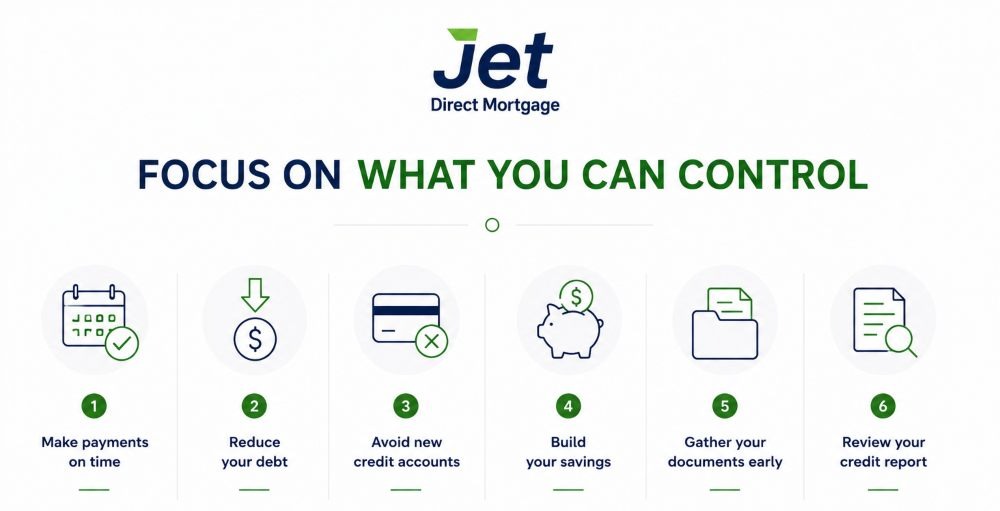
Focus on What You Can Control
Before submitting your FHA loan application, consider taking the following steps:
Continue making all of your payments on time. A consistent payment history demonstrates responsible financial management.
Reduce your outstanding debt where possible. Lower debt obligations can improve your overall financial profile.
Avoid opening new credit accounts. Applying for new loans or credit cards before closing can affect your mortgage application.
Build your savings. Having funds available for your home purchase and unexpected expenses can strengthen your financial position.
Gather your financial documents early. Organizing your income, employment, and asset documentation ahead of time can help prevent delays.
Review your credit report for errors. Incorrect information can negatively impact your credit profile if it isn’t corrected before you apply.
Small Improvements Can Add Up
You don’t always need to make dramatic financial changes to improve your mortgage readiness. Sometimes, consistently practicing good financial habits over several months can have a positive impact on your application.
For example, paying your bills on time, avoiding unnecessary debt, keeping your employment stable, and maintaining healthy banking habits all help demonstrate financial responsibility.
If you’re planning to get an FHA loan with bad credit, think of your mortgage application as more than just a credit score. The stronger your overall financial profile, the more confident your lender can be in your ability to manage a mortgage responsibly.
Rather than wondering whether your credit is “good enough,” focus on putting yourself in the best possible position before you apply. An experienced mortgage banker can review your financial situation, identify areas for improvement, and help you determine when you’re ready to move forward.
4. Avoid These Common Mistakes Before Applying
If you’re trying to get an FHA loan with bad credit, what you do before submitting your application can be just as important as your current credit score. Even if you’re otherwise qualified, certain financial decisions can complicate the underwriting process or temporarily weaken your application.
Fortunately, most of these mistakes are completely avoidable.
Common Mistakes That Can Affect Your FHA Loan Application
Mistake
Why It Can Be a Problem
Applying for new credit cards or loans
May increase your debt and trigger a new credit inquiry.
Financing a car or expensive furniture
Adds new monthly debt that can affect your qualification.
Missing or making late payments
Can negatively impact your credit profile, even if it’s just one payment.
Making large unexplained bank deposits
Your lender may ask you to document where the money came from.
Changing jobs without discussing it with your lender
May require additional documentation and delay underwriting.
Closing old credit accounts
Can sometimes affect your overall credit profile and available credit.
Spending your savings before closing
May leave you without sufficient funds to complete the transaction.
Many borrowers assume that once they’re pre-approved, they can return to their normal financial habits. In reality, your lender will continue reviewing your financial profile throughout the mortgage process, and significant changes may require additional evaluation before your loan can close.
The safest approach is to keep your finances as consistent as possible until you’ve completed your home purchase. Continue making payments on time, avoid taking on new debt, and let your mortgage banker know if any major financial changes are unavoidable.
If your goal is to get an FHA loan with bad credit, avoiding these common mistakes can help keep your application moving smoothly and reduce the likelihood of unnecessary delays or additional documentation requests.
5. Know When It Makes Sense to Apply
If you’re trying to get an FHA loan with bad credit, one of the biggest questions you may have is whether you should apply now or wait until your financial situation improves. The answer depends on more than just your credit score.
In some cases, applying sooner makes sense because you already meet the lender’s qualification requirements. In others, waiting a few months to improve your financial profile could strengthen your application and potentially give you access to more financing options.
You May Be Ready to Apply If…
Use this checklist to evaluate whether you’re in a good position to move forward:
You’ve been making your payments on time consistently.
You have a stable source of income.
Your employment situation is steady.
You have funds available for your home purchase and closing costs.
Your debt is manageable compared to your income.
You have the necessary documents ready for your mortgage application.
You’re planning to purchase a home that will be your primary residence.
If you checked most of these boxes, it may be worth speaking with a mortgage banker to review your options.
It May Be Worth Waiting If…
On the other hand, you may benefit from delaying your application if:
You’re currently behind on your payments.
You’ve recently opened several new credit accounts.
You’re planning to change jobs in the near future.
You’re actively working to reduce your debt.
You recently experienced a significant financial setback and need time to rebuild.
Waiting doesn’t necessarily mean giving up on homeownership, it may simply give you the opportunity to submit a stronger application.
If your goal is to get an FHA loan with bad credit, the best time to apply is when your overall financial profile reflects your current ability to manage a mortgage responsibly.
An experienced mortgage banker can review your situation, explain your options, and help you determine whether you’re ready to move forward now or whether a little more preparation could improve your chances of approval.
6. Your Next Steps Toward Getting an FHA Loan
If you’re hoping to get an FHA loan with bad credit, the good news is that you don’t have to figure everything out on your own. Whether you’re ready to apply today or you’re still working toward homeownership, taking the right steps now can help put you in a stronger position when the time comes.
Rather than worrying about whether your credit is “good enough,” focus on preparing a complete mortgage application and strengthening the factors that are within your control.
Your FHA Loan Action Plan
Review your credit report and correct any errors you find.
Continue making all of your payments on time to establish a positive payment history.
Avoid taking on new debt before applying for your mortgage.
Gather your financial documents so you’re ready when it’s time to apply.
Determine how much home fits comfortably within your budget.
Explore the FHA loan programs that best match your financial situation.
Speak with an experienced mortgage banker before house hunting to understand your options and identify any areas that could strengthen your application.
Remember, every borrower’s financial situation is unique. Two people with similar credit scores may have very different mortgage options depending on their income, employment history, debt obligations, and overall financial profile.
If your goal is to get an FHA loan with bad credit, don’t assume that a past financial setback determines your future. By understanding the FHA loan requirements, improving the areas you can control, and preparing before you apply, you may be closer to homeownership than you think.
Why Homebuyers Trust Jet Direct Mortgage for FHA Loans
If you’re looking to get an FHA loan with bad credit, choosing the right mortgage lender can be just as important as understanding the loan requirements. Every borrower has a unique financial story, and working with a lender that takes the time to understand your situation can make the mortgage process much more straightforward.
At Jet Direct Mortgage, we believe that a lower credit score shouldn’t automatically discourage you from pursuing homeownership. Our team works closely with borrowers to evaluate their complete financial profile, explain the available FHA loan options, and identify solutions that align with their individual goals.
When you work with Jet Direct Mortgage, you can expect:
Personalized guidance based on your financial situation
Expertise in FHA loan programs and qualification requirements
Clear communication throughout the mortgage process
A streamlined application and documentation process
Support from pre-approval through closing
A team that’s committed to helping you make informed home financing decisions
Whether you’re buying your first home, returning to the housing market, or simply exploring your options, we’re here to help you understand what’s possible and guide you through every step of the FHA loan process.
Ready to Explore Your FHA Loan Options?
Having bad credit doesn’t necessarily mean homeownership is out of reach. As you’ve seen throughout this guide, many factors influence whether you can get an FHA loan with bad credit, including your income, employment history, debt-to-income ratio, financial documentation, and recent credit habits.
While every mortgage application is different, understanding how FHA lenders evaluate borrowers can help you prepare more effectively and avoid common mistakes before you apply. Even if you’ve experienced financial setbacks in the past, taking steps to strengthen your overall financial profile may improve your chances of approval.
At Jet Direct Mortgage, we’re committed to helping homebuyers navigate the FHA loan process with clarity and confidence. Whether you’re ready to apply today or simply want to understand your options, our experienced team is here to answer your questions and help you determine the best path forward.
If you’re ready to get an FHA loan with bad credit, we’d love to help.
Frequently Asked Questions
Can you get an FHA loan with bad credit?
Yes, you may be able to get an FHA loan with bad credit if you meet the lender’s eligibility requirements. While your credit score is important, lenders also consider factors such as your income, employment history, debt-to-income ratio, available assets, and overall financial profile when reviewing your application.
What credit score do I need to get an FHA loan with bad credit?
In general, borrowers with a credit score of 580 or higher may qualify for the FHA’s minimum down payment option, while borrowers with scores between 500 and 579 may still qualify under certain circumstances if they meet additional requirements. Individual lenders may establish higher minimum credit score requirements based on their own lending guidelines.
Can I get an FHA loan with bad credit after bankruptcy?
Possibly. FHA guidelines allow borrowers to qualify after bankruptcy if certain waiting periods have been met and they satisfy the lender’s qualification requirements. Your lender will also review how you’ve managed your finances since the bankruptcy.
Can I get an FHA loan with bad credit after a foreclosure?
Yes, it may be possible. FHA loans have established waiting periods following a foreclosure, and you’ll generally need to demonstrate that you’ve re-established good financial habits before applying. An experienced mortgage banker can help determine your eligibility based on your specific situation.
Can I qualify for an FHA loan if I have collection accounts?
Having collection accounts doesn’t automatically prevent you from qualifying. Lenders will evaluate your overall financial profile, including the nature of the collections, your payment history, and any additional FHA loan requirements that may apply.
Will bad credit affect my FHA loan approval?
Bad credit can affect your mortgage options, but it doesn’t necessarily prevent approval. Lenders review your complete financial profile rather than relying solely on your credit score. Stable income, responsible financial habits, and manageable debt can all strengthen your application.
Can I improve my chances of getting an FHA loan with bad credit?
Yes. Making your payments on time, reducing outstanding debt, avoiding new credit accounts, reviewing your credit report for errors, and organizing your financial documents before applying can all help strengthen your mortgage application.
Should I wait to apply until my credit improves?
It depends on your overall financial situation. If you’re actively rebuilding your credit or reducing debt, waiting may strengthen your application. However, if you already meet the lender’s qualification requirements, you may be able to move forward sooner than you expect. Speaking with a mortgage banker can help you determine the right time to apply.
Do FHA loans have more flexible credit requirements than conventional loans?
Generally, yes. FHA loans are designed to make homeownership more accessible and often have more flexible credit requirements than some conventional mortgage programs. However, you’ll still need to meet your lender’s eligibility guidelines and demonstrate that you can responsibly manage a mortgage.
Experienced Chief Operating Officer with a 26 + year demonstrated history of working in the banking industry. Skilled in all aspects of the residential mortgage market . Strong business development professional with a Bachelor of Science (BS) focused in Business Administration and Management, from St. Joseph College. A direct endorsement underwriter and a licensed Mortgage Loan Originator.
Start the Home Loan Process Today With Jet Direct Mobile
We’re committed to making the home loan application process as easy as possible. To that end, we have developed our very own mobile app, Jet Direct Mobile.