


For many seniors in Suffolk County, NY, tapping into home equity becomes a key strategy to maintain financial stability in retirement. Two common options are the Reverse Mortgage (especially the Home Equity Conversion Mortgage, or HECM) and a Home Equity Line of Credit (HELOC). Each has its uses, rules, and trade-offs.
This guide walks Suffolk seniors through:
- What each option is and how it works local to Long Island.
- How eligibility, costs, and risks compare.
- Practical examples and questions to ask before choosing.
With the right information—and guidance from Jet Direct Mortgage—you can decide which product better supports your retirement goals.
Suffolk County Senior Home & Equity Landscape
- Suffolk County has a substantial senior population owning homes outright or with significant equity, particularly in areas like Riverhead, Patchogue, and the North Shore.
- Housing values are high—median home values in Suffolk are well above national averages—making home equity a meaningful asset for many.
- Seniors often need funds for health care, home upkeep, or supplementing retirement income, which makes reverse mortgages and HELOCs popular topics.
Because property taxes, insurance, and maintenance costs remain, the financial implications of borrowing against equity must be clearly understood.
What Is a Reverse Mortgage? (HECM)
A reverse mortgage, most commonly via a Home Equity Conversion Mortgage (HECM), is a loan available for homeowners aged 62 or older that allows them to convert part of their home equity into cash without needing to make monthly mortgage payments. The repayment is deferred until the homeowner moves out permanently, sells the home, or passes away.
In Suffolk, seniors who want to stay in their homes and use equity for living expenses, medical bills, or home improvements often consider reverse mortgages. Because there are no required monthly payments (on principal or interest), this option can ease cash flow pressures—but the interest and certain costs accumulate over time.
Key Features
- Must be 62+ years old.
- Home must be primary residence.
- Must own enough equity in the home.
- Loan options can include receiving a lump sum, monthly payments, or a line of credit.
- Keep paying property taxes, homeowners insurance, maintenance.
Eligibility Criteria
- Age 62 or older.
- Sufficient home equity.
- Primary residence.
- Able to maintain home and pay insurance/taxes.
- Must complete counseling as required by HUD when using a HECM.
Benefits of Reverse Mortgages
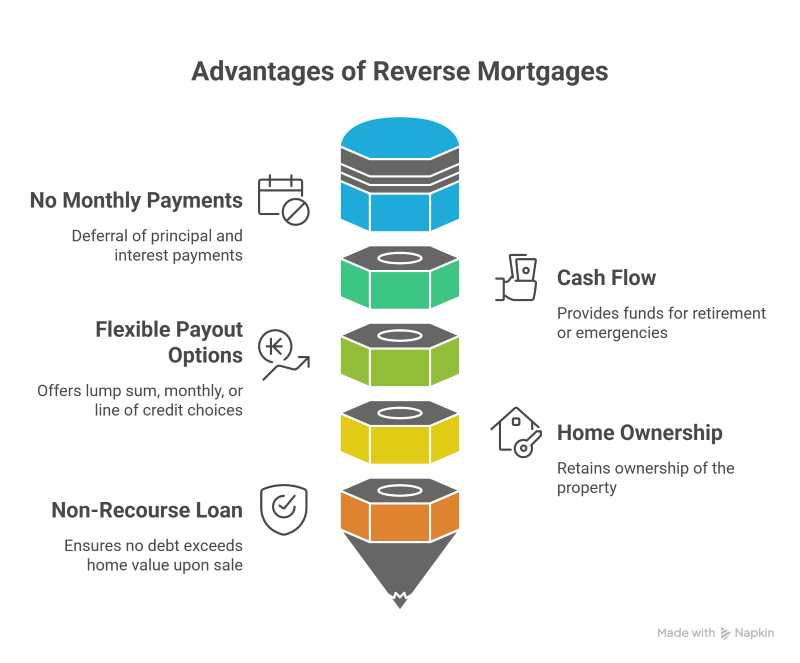
- No monthly mortgage payments required (principal & interest); payments are deferred.
- Can provide cash flow to cover retirement expenses or emergencies.
- Flexible payout options (lump sum, monthly, line of credit).
- You keep ownership of the home.
- The loan is non-recourse under HECM: you (or your heirs) won’t owe more than the home’s value when sold.
What Is a HELOC?
A Home Equity Line of Credit (HELOC) is a credit line secured by your home equity that you can draw against as needed. Think of it like a credit card with your home as collateral—but with usually lower interest rates than unsecured options. For seniors in Suffolk, HELOCs may be appealing when unexpected expenses arise (home repairs, medical costs) or when a predictable, limited need for cash is present.
HELOCs typically have a “draw period” during which you can borrow up to the limit and pay interest on what you use, followed by a repayment period when both principal and interest are required.
Key Features
- Flexible access to funds as needed (up to established credit limit).
- Interest rates often variable (though some HELOCs may offer fixed-rate caps or options).
- Monthly payments are required (interest + principal once in repayment period).
- Home acts as collateral: must keep up with payments or risk foreclosure.
Eligibility Criteria
- Sufficient equity in your home.
- Good credit score (often 620+).
- Verifiable income to repay interest/principal.
- Primary residence in most cases.
Benefits of HELOCs
- Flexibility: borrow only what you need, when you need it.
- Potential lower initial cost compared to reverse mortgages.
- Useful for shorter-term needs: repairs, medical bills, travel, etc.
- Often less complex in terms of counseling or mandatory insurance fees.

Side-by-Side Comparison: Reverse Mortgage vs HELOC
| Feature | Reverse Mortgage (HECM) | HELOC |
| Eligibility Age Requirement | Must be 62+ | No strict age requirement (younger owners eligible) |
| Monthly Payments | No monthly mortgage payments required; interest accrues | Required during draw and repayment periods (interest, then principal + interest) |
| Access to Funds | Lump sum, monthly payments, line of credit, or combination | Line of credit; draw period then repayment period |
| Ownership & Inheritance | Homeowner retains title; heirs may inherit but must repay loan or sell home | Homeowner retains title; equity remains with heirs after repayment |
Factors Suffolk Seniors Should Consider
- Your Age and Longevity Goals
- Reverse mortgage becomes more advantageous the longer you expect to stay in home.
- If you might move or downsize soon, HELOC might be safer.
- Cash Flow and Payment Obligations
- Reverse mortgage reduces monthly payments.
- HELOC requires monthly payments and risk of rate increases.
- Equity & Value of Home
- Need sufficient equity for either option; reverse mortgages typically require more equity up front.
- Estate / Inheritance Goals
- Reverse mortgage reduces equity over time and may reduce what heirs receive.
- HELOC leaves more control of home value if debts are repaid.
- Costs, Fees, and Interest Rates
- Reverse mortgages have origination fees, mortgage insurance premiums, higher interest accrual.
- HELOCs tend to have lower fees initially but variable rates can increase.
- Tax, Insurance, and Maintenance Obligations
- Must continue paying property taxes, insurance and maintain home condition with both options.
Real-World Scenarios for Suffolk Seniors
- Seniors who want monthly supplemental income: A 70-year-old homeowner using part of equity via a reverse mortgage to supplement Social Security while staying in their Long Island home.
- Home repairs or medical costs: A 65-year-old needing funds for roof repair or medical bills may prefer a HELOC—draw funds when needed, repay, reuse.
- Estate planning concerns: Seniors wanting to leave home equity to heirs might lean toward HELOC if they can manage payments, rather than letting reverse mortgage interest accumulate.
Steps to Apply
Reverse Mortgage (HECM)
- Confirm age 62+ and that home is your primary residence.
- Get your home appraised to determine equity.
- Complete HUD-required counseling for reverse mortgages.
- Review payout options (lump sum, monthly, line of credit) with Jet Direct Mortgage.
- Close the loan and begin accessing allowed proceeds.
HELOC
- Check your home equity via appraisal.
- Verify credit score and income for repayment ability.
- Compare draw periods, interest rates, and fees across lenders.
- Apply through Jet Direct Mortgage (or chosen lender).
- Manage draws and make payments as required; repay principal + interest in repayment period.
(FAQs)
1. What is the minimum age for a reverse mortgage in Suffolk?
You must be at least 62 years old to qualify for a HECM reverse mortgage. HELOCs do not have a strict age requirement.
2. Do I need good credit for a reverse mortgage or a HELOC?
- For a reverse mortgage (HECM): credit and income are considered, but requirements are more forgiving. The key is demonstrating ability to maintain the home (taxes, insurance, upkeep).
- For a HELOC: credit score typically needs to be in a strong range (often 620+) and you must show you can repay principal + interest.
3. Are there monthly payments with a reverse mortgage?
No monthly mortgage payments (principal & interest) are required with a reverse mortgage while you live in the home. You do remain responsible for property taxes, homeowner’s insurance, and maintenance. Loan repayment generally happens when you sell, move out, or pass away.
4. Can I still leave something for my heirs with a reverse mortgage or HELOC?
Yes, but the amount depends on how much equity remains after repayments and accruals.
- For HELOC: Heirs inherit the home minus any outstanding balance.
- For reverse mortgage: Loan balance (accrued interest, fees) reduces equity. Under HECM non-recourse rules, you won’t owe more than home’s value.
5. How much does a reverse mortgage cost compared to a HELOC?
Costs include:
| Cost Type | Reverse Mortgage (HECM) | HELOC |
| Origination & closing fees | Higher; includes mortgage insurance, HUD fees, etc. | Generally lower; may include appraisal, origination, etc. |
| Interest rate type | Fixed or variable; interest accrues and is added to balance | Usually variable (some fixed-rate HELOC or fixed options mixed in |
| Ongoing costs | Mortgage insurance premiums, servicing fees, etc. | Interest payments; possible yearly or maintenance fees; variable costs over time |
6. What happens if I cannot maintain taxes, insurance, or home condition?
With both reverse mortgage and HELOC, failing to pay property taxes or insurance, or letting the home fall into disrepair can lead to foreclosure. With a reverse mortgage, keeping up with these obligations is required under the loan terms.
7. Which is faster or simpler to set up?
- HELOC is generally quicker since the process is more like applying for a home equity loan: appraisal, credit check, closing.
- Reverse mortgages require counseling sessions, more documentation about home condition, tax & insurance obligations, and sometimes more paperwork and time.
8. When does a reverse mortgage make more sense than a HELOC for Suffolk seniors?
Reverse mortgage often makes more sense if you:
- Plan to stay in the home indefinitely.
- Want to avoid monthly payments.
- Need a steady income stream during retirement.
- Have significant equity in your home and are okay with the fact that equity will shrink over time.
A HELOC might be better if your cash needs are shorter-term, you want to leave equity to heirs, or prefer control over debt and repayment schedule.
Conclusion
For Suffolk County seniors, both a reverse mortgage (HECM) and a HELOC offer ways to unlock home equity—but they serve different needs. A reverse mortgage is ideal for those wanting payment relief and longevity in the home, while a HELOC gives flexibility with repayment and preserves more equity if managed well.
Contact Jet Direct Mortgage today to explore whether a reverse mortgage or HELOC better suits your financial goals.
- 🌐 Visit JetDirectMortgage.com
- 📞 Call: +1.800.700.4JET
- 📧 Email: express@jetdirectmortgage.com
- 📍 4875 Sunrise Hwy, Suite 300, Bohemia, New York 11716
Additional Resources
- HECM Reverse Mortgages – Jet Direct Mortgage
- HELOCs / Home Equity Lines of Credit – Jet Direct Mortgage
- Mortgage Calculator – Jet Direct Mortgage
- Contact Jet Direct Mortgage

Experienced Chief Operating Officer with a 26 + year demonstrated history of working in the banking industry. Skilled in all aspects of the residential mortgage market . Strong business development professional with a Bachelor of Science (BS) focused in Business Administration and Management, from St. Joseph College. A direct endorsement underwriter and a licensed Mortgage Loan Originator.