Did you know that 90% of homebuyers either don’t know what credit score lenders look for or think it needs to be higher than it really is? That’s according to Fannie Mae – and it might include you.
This common misconception can lead people to believe they’re not ready to buy a home, when in reality, they may already qualify. Let’s clear up the confusion by digging into what credit scores actually mean in the homebuying process.
There’s No Single Credit Score Requirement
Contrary to popular belief, there’s no universal credit score required to buy a home. Different loan types have different average credit score ranges. Take a look at this data showing the median credit scores of recent buyers based on loan type, and you’ll see there’s more flexibility than most assume.
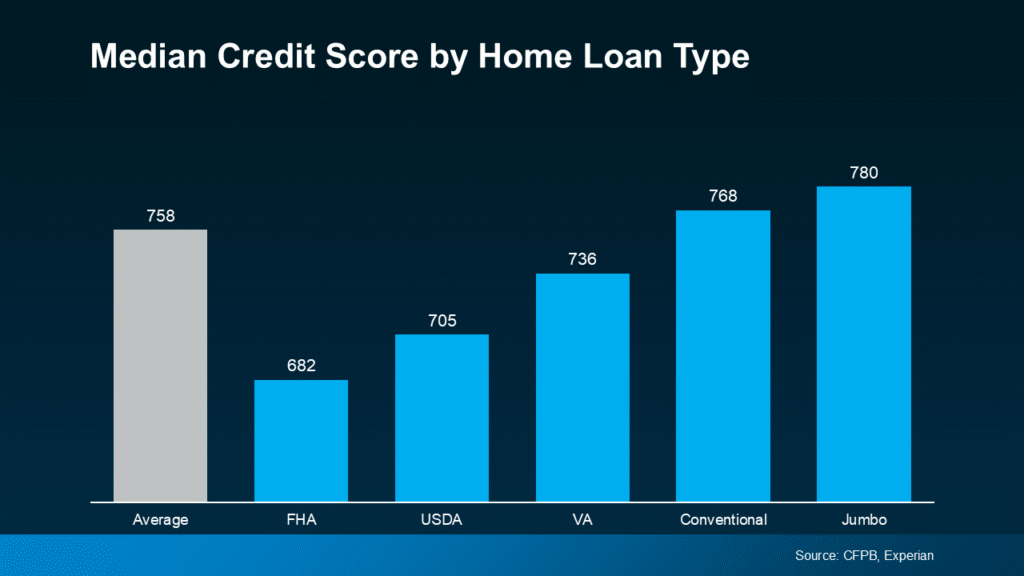
Here’s the key takeaway: there’s no magic number. Lenders don’t all use the same cutoff, which means more buyers may qualify than they think. As FICO puts it:
“There is no single ‘cutoff score’ used by all lenders… each lender has its own strategy, including the level of risk it finds acceptable.”
This variation means the door to homeownership may be more open than you realized.
Why Your Credit Score Still Matters
While there’s no one-score-fits-all rule, your credit score does still play a big role in your mortgage journey. Lenders use it to understand how you handle debt — things like making payments on time, managing balances, and keeping up with other financial obligations.
Your credit score can impact:
- The loan types you qualify for
- The terms of those loans
- Your mortgage interest rate
Your score doesn’t need to be perfect. Even with a lower score, you may still qualify for a home loan.
Want To Improve Your Score? Start Here
If you’re looking to boost your credit before buying, the Federal Reserve Board recommends these strategies:
- Pay Bills on Time
On-time payments are one of the strongest indicators of financial reliability. That includes credit cards, rent, utilities, and even your phone bill. - Lower Your Credit Utilization
Try to use as little of your available credit as possible. The less you owe relative to your credit limit, the better it looks to lenders. - Check Your Credit Reports for Errors
Mistakes happen — and they can hurt your score. Review your reports regularly and dispute any inaccuracies. - Avoid Opening New Accounts
Each time you apply for new credit, it can trigger a hard inquiry that may slightly lower your score. Avoid opening unnecessary accounts during the mortgage process.
Bottom Line
Your credit doesn’t have to be flawless to get a mortgage. But improving your score could help you unlock better rates and terms. The best first step? Talk to a trusted lender. They can help you understand where you stand — and what’s possible based on your unique situation.
Source: Keeping Current Matters

Experienced Chief Operating Officer with a 26 + year demonstrated history of working in the banking industry. Skilled in all aspects of the residential mortgage market . Strong business development professional with a Bachelor of Science (BS) focused in Business Administration and Management, from St. Joseph College. A direct endorsement underwriter and a licensed Mortgage Loan Originator.